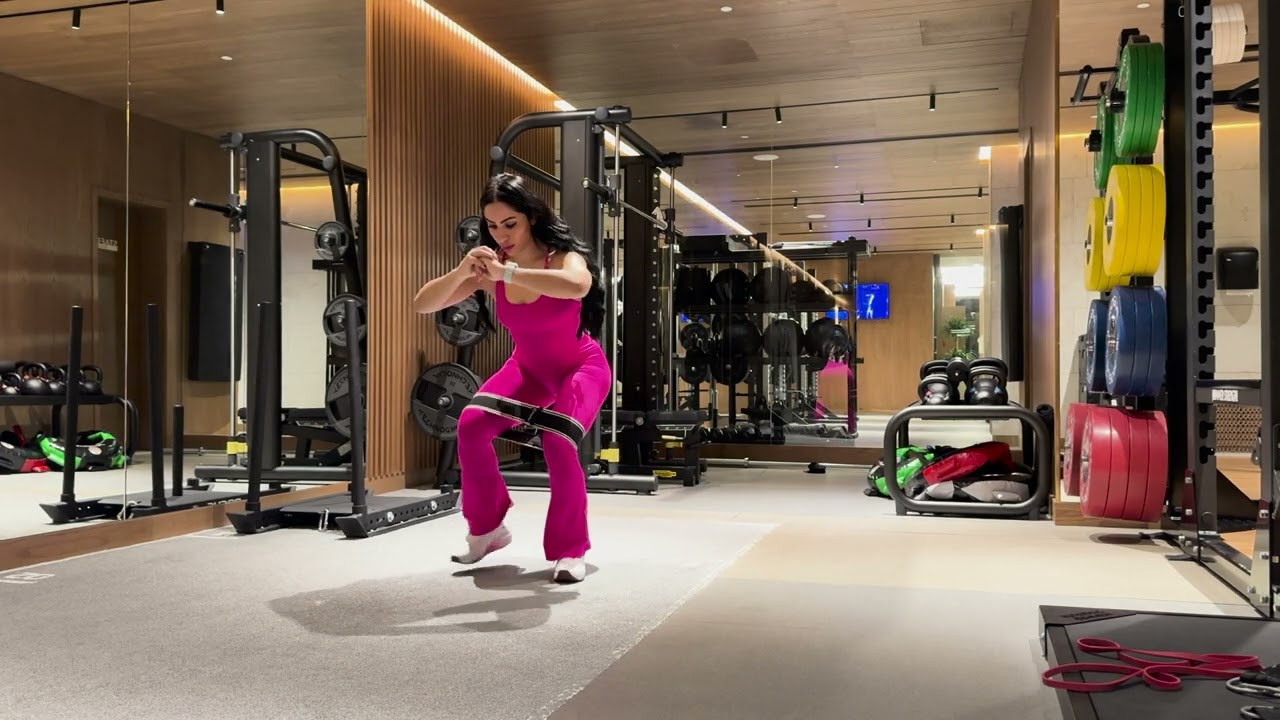
Band Duck Walk

  • MuscleGlutes
  • LevelBeginner

Muscles worked

Band Duck Walk
ChestObliquesAbsBicepsTricepsNeckFront deltsAdductorsQuadsCalvesForearms
Front
TrapsRear deltsUpper backTricepsLower backForearmsGlutesHip abductorsHamstringsCalvesCalvesCalves
Back
PrimarySecondary
Exercise guide

How to do the Band Duck Walk

The Band Duck Walk is a resistance-based activation exercise designed to strengthen the glutes, hips, and thighs while improving lower body stability. Performed in a half-squat position with a resistance band placed around the thighs or ankles, this exercise reinforces proper knee alignment, hip activation, and core engagement.

The movement involves taking small, controlled steps forward, backward, or sideways while maintaining constant tension in the band. This continuous resistance challenges the glute medius and hip stabilizers, making it an effective warm-up drill before squats, deadlifts, or athletic activities. It is especially valuable for targeting muscles that are often under-activated in traditional training, helping reduce injury risk and improve overall performance.

To ensure proper mechanics and maximize glute recruitment, keep the chest lifted, maintain the half-squat position, and push the knees outward against the band. Unlike larger compound lifts, the Band Duck Walk emphasizes precision, control, and muscular endurance in the hip and thigh muscles. Difficulty can be adjusted by changing the placement of the band or selecting a different resistance level.

Common mistakes include standing too tall, allowing the knees to collapse inward, or taking steps that are too large, all of which reduce effectiveness and may cause strain. The focus should remain on small, deliberate movements and steady tension throughout the exercise.

When performed consistently and with proper form, the Band Duck Walk enhances lower body strength, stability, and mobility. It is particularly beneficial as part of a dynamic warm-up, a corrective exercise for hip or knee issues, or as an accessory drill to build resilience in the lower body. This makes it an excellent choice for athletes, lifters, and anyone seeking to improve glute activation and hip function.

About this guide
Written byTeam Exercise Library
Reviewed byDr. Jaime Alnassim
Updated
01

Setup

4
  • Place a resistance band around your thighs just above the knees, or around the ankles for more challenge.
  • Stand with feet hip-width apart to create slight tension in the band.
  • Lower into a half-squat position with hips back and chest upright.
  • Engage your core and keep knees aligned over toes.
02

Execution steps

4
  1. Take small, controlled steps forward while maintaining the half-squat stance.
  2. Keep tension in the band throughout the movement by not bringing feet too close together.
  3. Continue walking for the desired number of steps or distance.
  4. Reverse direction by stepping backward or sideways, maintaining the same posture.
03

Coaching cues

4
  • Stay low in the squat throughout the movement.
  • Keep knees pushed outward to prevent band collapse.
  • Move slowly and with control to maintain constant tension.
  • Engage glutes and core to stabilize the lower body.
04

Common mistakes

4
  • Allowing knees to cave inward.
  • Standing up too tall and losing squat position.
  • Taking steps that are too large, reducing band tension.
  • Leaning forward excessively instead of keeping chest lifted.
05

Safety notes

4
  • Use a band with appropriate resistance to avoid joint strain.
  • Keep knees tracking over toes to prevent unnecessary stress.
  • Avoid jerky or uncontrolled movements.
  • Perform on a flat, stable surface to maintain balance.

This article is for general education, not medical advice. If you have pain or an injury, check with a doctor or physical therapist before starting a new exercise.

Also known as
Resistance Band Duck WalkBanded Duck Walk
Same movement, same muscle

Variations & alternatives

This website uses cookies to enhance your browsing experience and ensure the site functions properly. By continuing to use this site, you acknowledge and accept our use of cookies.

Accept All Accept Required Only