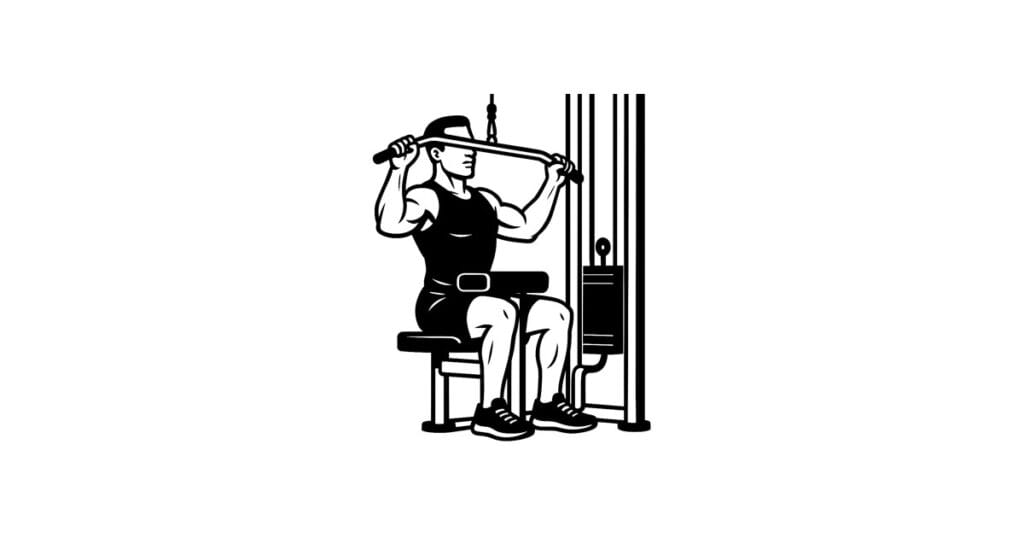
The Weighted Pull-Up is an advanced upper-body strength exercise that increases the difficulty of a standard bodyweight Pull-Up by adding external resistance. The exercise is performed from a pull-up bar using an overhand grip while additional weight is securely attached to the body. The lats are the primary muscle group worked, while the upper back, biceps, forearms, shoulders, traps, and core contribute throughout the movement. Adding resistance increases the force required to lift the body, making the Weighted Pull-Up a challenging exercise for developing upper-body pulling strength and muscular control.
The lats perform much of the pulling work during the Weighted Pull-Up. These large muscles along the sides of the back help draw the upper arms downward toward the torso as the body rises. The upper-back muscles assist with controlling the shoulder blades, while the biceps contribute through elbow flexion. The forearms maintain a secure grip on the bar, and the shoulders and traps stabilize the shoulder complex. The abdominal muscles help control the torso and prevent the added resistance from creating excessive movement.
To perform a Weighted Pull-Up, first secure the additional resistance to your body. A weight plate can be attached using an appropriate loading method that allows the resistance to remain stable beneath the body. Make sure the weight is securely positioned and cannot detach during the exercise. The added load should hang freely without interfering with the pull-up bar or surrounding equipment.
Stand beneath a secure pull-up bar and take an overhand grip slightly wider than shoulder-width. Wrap your hands firmly around the bar and lift your feet from the floor. Begin in a controlled hanging position with your arms extended. Keep your shoulders active and brace your abdominal muscles. Allow the added resistance to become stable before initiating the first repetition.
Begin the pull by drawing your shoulder blades down and establishing tension through your lats and upper back. Bend your elbows and pull your body upward while driving your elbows down toward your sides. Keep your chest lifted and maintain a stable torso as you rise. The added resistance should remain controlled beneath you rather than swinging forward and backward.
Continue pulling until your chin reaches or passes the level of the bar. Maintain a natural head and neck position rather than reaching the chin forward to complete the repetition. Pause briefly at the top while keeping tension through your back and arms. The body and added weight should remain controlled throughout the transition into the lowering phase.
Slowly extend your elbows and lower yourself toward the starting position. Maintain tension through your lats, upper back, and arms as you descend. Continue until your arms are fully extended and you have returned to a controlled hanging position. Avoid suddenly dropping into the bottom or allowing the added resistance to pull your body downward uncontrollably.
The main difference between a Weighted Pull-Up and a standard Pull-Up is the external resistance. During a bodyweight Pull-Up, the primary resistance comes from the person’s own body mass. Adding weight increases the total resistance that must be moved through the same vertical pulling pattern. This makes proper technique and control especially important because errors that may be manageable during bodyweight repetitions can become more demanding when additional load is present.
Controlling the added weight is an important part of the exercise. Swinging resistance can change the body’s center of mass and create momentum that interferes with the pulling motion. Brace the core and keep the legs controlled to minimize movement. If the weight begins swinging significantly, allow it to stabilize before performing another repetition.
A common mistake is using excessive resistance. Adding more weight than can be controlled may shorten the range of motion, increase swinging, or cause the person to rely on kicking and momentum. The added resistance should allow the movement to remain smooth from the bottom position until the chin reaches or passes the bar.
Scapular control remains important during the Weighted Pull-Up. Establishing tension through the shoulders and upper back before aggressively bending the elbows creates a stronger starting position. Avoid shrugging the shoulders excessively toward the ears as the body rises. The shoulder blades should move naturally while remaining controlled throughout the repetition.
The lowering phase deserves particular attention because the added resistance increases the force acting on the body. Dropping quickly from the top can create unnecessary stress through the shoulders, elbows, and grip. Lowering under control keeps the pulling muscles engaged and allows the body to return smoothly to the starting position.
Grip strength is also challenged more heavily than during an unweighted Pull-Up because the hands and forearms must support both body weight and the additional resistance. Maintain a secure grip throughout every repetition and stop before grip fatigue prevents safe control of the bar.
Overall, the Weighted Pull-Up is an advanced strength exercise for developing the lats, upper back, biceps, forearms, shoulders, and core. Adding external resistance increases the challenge while preserving the fundamental mechanics of the traditional Pull-Up. When performed with securely attached resistance, active shoulders, a braced core, full range of motion, minimal swinging, and a controlled descent, the Weighted Pull-Up provides an effective way to develop high levels of upper-body pulling strength and muscular control.