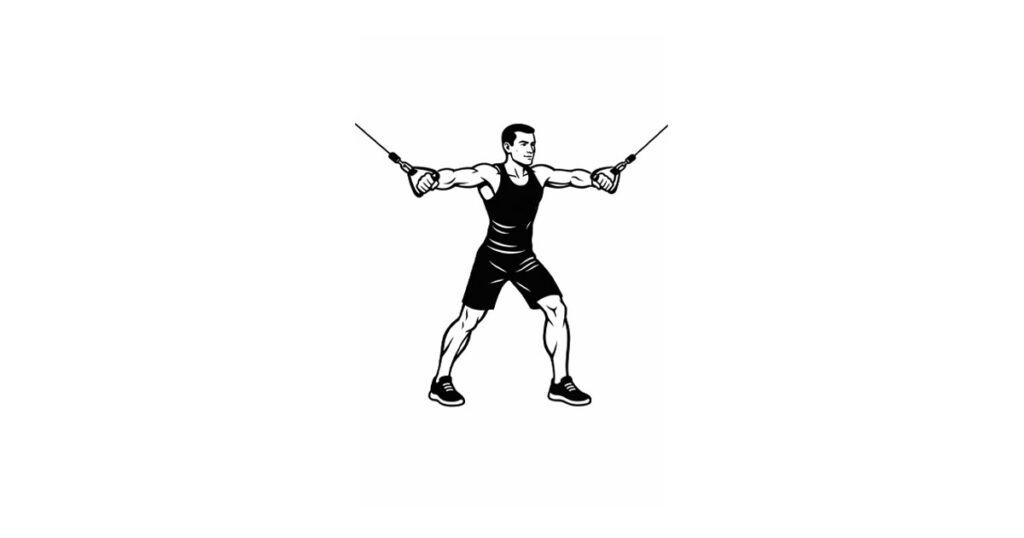
The Standing Cable Incline Chest Press is a pressing exercise designed to emphasize the upper portion of the chest while also engaging the shoulders, triceps, and core stabilizers. Performed in a standing position with low cable pulleys, this movement follows an upward and forward pressing path that closely aligns with the upper chest fibers, making it an effective option for developing upper chest strength and muscular definition.
Unlike bench-based pressing variations, the standing cable incline chest press demands greater total-body stability. The core and lower body work isometrically to maintain balance and posture as the cables pull the arms backward and downward. This added stability requirement encourages efficient force transfer and reinforces controlled pressing mechanics without the need for excessive loading.
The primary muscles involved in this exercise are the upper chest fibers, which contribute to shoulder flexion and upward pressing movements. The shoulders assist by guiding the arms through the incline path, while the triceps support elbow extension. Throughout the movement, the abdominal muscles remain active to prevent excessive spinal extension and maintain proper alignment.
One of the key benefits of this movement is the constant tension provided by the cables. Unlike free-weight presses, where resistance can decrease at certain points in the range of motion, cable resistance remains consistent during both the pressing and lowering phases. This continuous tension increases time under tension and promotes more complete muscle activation across the chest.
Proper setup plays a major role in maximizing effectiveness. Setting the pulleys low allows the resistance to follow a natural incline pressing angle. A staggered stance improves balance and limits unwanted body sway. Keeping the ribs down and the core braced helps prevent excessive lower-back arching and ensures the chest remains the primary driver of the movement.
During execution, the handles should travel upward and slightly inward rather than straight forward. This pressing path aligns more closely with the upper chest fibers and reduces stress on the shoulder joints. The elbows should remain slightly tucked instead of flaring outward, which helps maintain shoulder stability and keeps tension focused on the chest.
At the top of the movement, bringing the handles close together and briefly squeezing the chest reinforces muscle engagement. The arms should reach full extension without locking the elbows, maintaining tension while protecting the joints. The return phase should be slow and controlled, allowing the chest to stretch under load without losing stability.
The standing position also promotes greater awareness of posture and body control. Leaning backward to move a heavier weight reduces effectiveness and shifts tension away from the chest. Using moderate resistance allows the movement to remain strict and controlled, maximizing upper chest involvement while minimizing joint strain.
Another advantage of the standing cable incline chest press is its unilateral control. Each arm works independently, which can help address strength imbalances and promote symmetrical development. The freedom of movement provided by the cable handles allows for a more natural pressing path compared to fixed-bar exercises.
Overall, the Standing Cable Incline Chest Press is a highly effective exercise for targeting the upper chest while reinforcing core stability and controlled pressing mechanics. When performed with proper technique and manageable resistance, it supports balanced chest development, improved shoulder stability, and refined upper-body strength.