The Stability Ball Cobra is a bodyweight upper-back exercise that strengthens the muscles responsible for good posture, shoulder stability, and scapular control. Performed while lying face down on a stability ball, the exercise combines shoulder horizontal abduction with external rotation to activate the upper back while the unstable surface engages the core and spinal stabilizers. It is an excellent movement for improving posture, strengthening the muscles that oppose rounded shoulders, and promoting healthy shoulder mechanics.
The primary muscle group targeted during the Stability Ball Cobra is the upper back. The rhomboids and middle trapezius are responsible for retracting the shoulder blades during the lifting phase, helping strengthen the muscles that maintain proper posture. The lower trapezius also contributes by stabilizing the shoulder blades and encouraging healthy scapular movement throughout each repetition.
Several secondary muscle groups assist during the exercise. The rear delts help lift the arms away from the body, while the lower back muscles support the torso in a stable position. The abs and core remain engaged throughout the movement to stabilize the body on the unstable stability ball, preventing unnecessary movement and helping maintain proper spinal alignment.
One of the greatest benefits of the Stability Ball Cobra is improved posture. Many people spend long hours sitting, working at a computer, or looking down at mobile devices, which often leads to rounded shoulders and weakened upper-back muscles. Strengthening the postural muscles helps pull the shoulders into better alignment, improving posture and reducing muscular imbalances.
Another major benefit is enhanced shoulder stability and scapular control. The exercise teaches the shoulder blades to move properly during arm movement while strengthening the muscles that stabilize the shoulder joint. Improved scapular control can enhance performance during pressing, pulling, and overhead exercises while reducing unnecessary stress on the shoulders.
The stability ball also increases the challenge by requiring continuous core activation and balance. Unlike performing similar movements on a bench or the floor, the unstable surface forces the trunk muscles to remain engaged throughout every repetition, improving coordination between the upper body and core.
To perform the Stability Ball Cobra, place a stability ball on a stable, non-slip surface and lie face down with your chest supported on the ball. Position your feet comfortably apart to create a stable base and allow your arms to hang directly beneath your shoulders. Brace your core and maintain a neutral head and neck position.
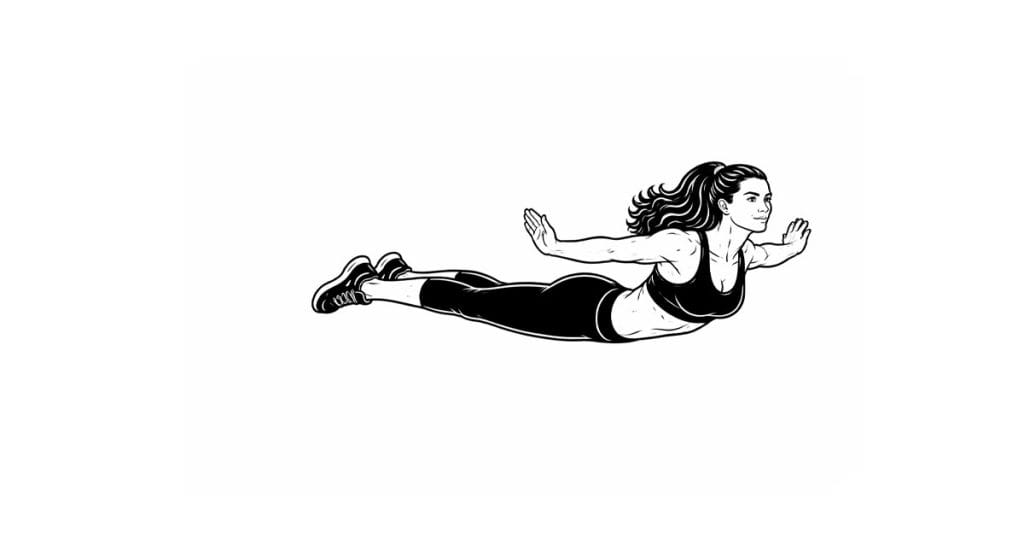
Lift your chest slightly while raising your arms out to your sides. Rotate your shoulders so your thumbs point upward throughout the movement. At the top of the repetition, squeeze your shoulder blades together without shrugging your shoulders toward your ears. Pause briefly before slowly lowering your arms back to the starting position under control.
Proper technique is essential for maximizing results. Focus on initiating the movement from your shoulder blades rather than simply lifting your arms. Maintain a neutral spine, keep your neck relaxed, and avoid excessive movement through the lower back. Slow, controlled repetitions are more effective than using momentum.
Common mistakes include shrugging the shoulders, excessively arching the lower back, lifting the head too high, swinging the arms, or failing to externally rotate the shoulders so the thumbs point upward. These errors reduce activation of the upper-back muscles and place unnecessary stress on the neck and shoulders. Prioritizing quality movement ensures the exercise remains both effective and safe.
From a safety standpoint, the Stability Ball Cobra is appropriate for beginners because it uses bodyweight resistance and emphasizes movement quality rather than heavy loading. As strength improves, the exercise can be progressed by increasing the pause at the top, slowing the lowering phase, or holding light dumbbells while maintaining perfect technique.
Overall, the Stability Ball Cobra is an excellent exercise for strengthening the upper back, improving posture, enhancing shoulder stability, and developing better scapular control. Its combination of bodyweight resistance and stability-ball training makes it a valuable addition to strength programs, rehabilitation routines, and injury-prevention workouts while promoting long-term shoulder health.