The Single-Leg Stability Ball Glute Bridge is a unilateral bodyweight exercise that strengthens the glutes while challenging the hamstrings, core, and lower-body stabilizers. Unlike the standard stability ball glute bridge, which uses both feet on the ball, this variation places the workload primarily on one leg. The working leg must extend the hip while simultaneously controlling the unstable Swiss ball, creating a demanding combination of strength, balance, and pelvic stability. This makes the exercise particularly effective for improving single-leg hip extension strength and identifying differences in control between the left and right sides.
The gluteus maximus is the primary muscle responsible for lifting the hips during the Single-Leg Stability Ball Glute Bridge. It produces hip extension as the pelvis rises from the floor. The hamstrings assist with hip extension and help keep the heel securely positioned on the ball. The abdominal muscles work isometrically to prevent the pelvis from rotating or the lower back from arching excessively, while the calves contribute to ankle stability and control of the Swiss ball.
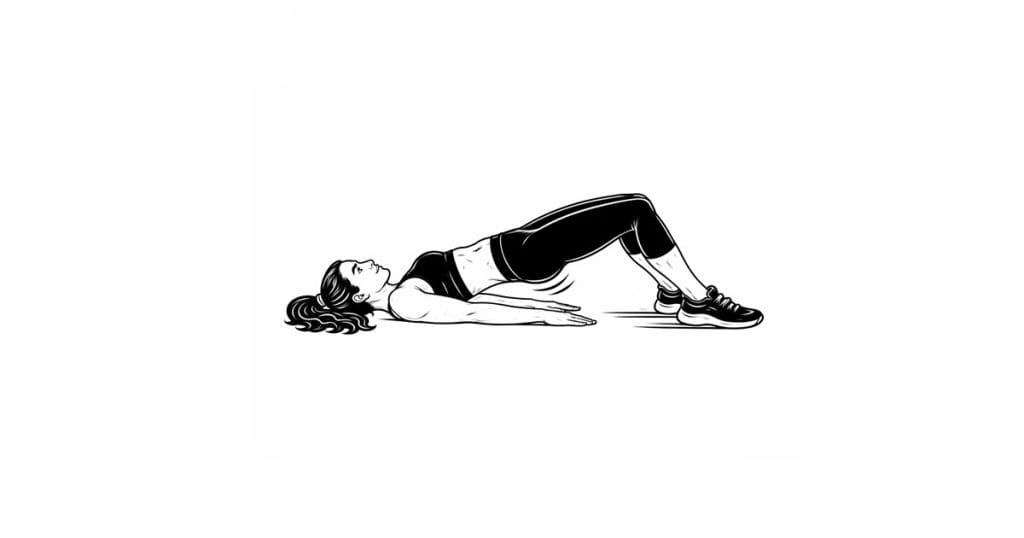
To perform the exercise, lie on your back with one heel resting on top of a Swiss ball. Keep the opposite leg off the ball with the knee slightly bent rather than extending it rigidly upward. Position your arms at your sides with your palms pressing lightly into the floor for support. Brace your core and establish a level pelvis before beginning. Press through the heel on the ball and lift your hips until your torso and working thigh form a straight line. Squeeze the working-side glute at the top, pause briefly, and then lower your hips back toward the floor under control.
The unilateral setup significantly increases the challenge compared to the two-leg version. With only one leg supporting the lower body, the glutes and hamstrings must produce more force while the core works harder to prevent rotation. The Swiss ball adds another level of difficulty because it can move in multiple directions. Small shifts in the ball require continuous adjustments from the working leg, ankle, hip, and core to maintain balance and alignment.
One of the main benefits of the Single-Leg Stability Ball Glute Bridge is improved unilateral hip extension strength. Many activities, including walking, running, climbing stairs, and changing direction, require one leg to produce force independently. Training the glutes one side at a time can help improve control and expose side-to-side differences that may be less noticeable during bilateral exercises.
The exercise also reinforces pelvic stability. As the hips rise, the pelvis naturally wants to rotate toward the unsupported side. The obliques, deep abdominal muscles, and working-side glute must resist this rotation and keep the hips level. This improves coordination between the core and hips while teaching the body to maintain alignment during single-leg movement.
Common mistakes include allowing the pelvis to rotate, pushing through the toes instead of the heel, arching the lower back at the top, or allowing the ball to roll excessively. Another common error is lifting the hips higher by extending through the lumbar spine rather than fully contracting the glute. The top position should come from hip extension while the ribs remain controlled and the spine stays neutral.
The lowering phase is equally important. Dropping quickly reduces muscular control and allows the ball to move unnecessarily. Lower the hips slowly while maintaining pressure through the heel and keeping the pelvis level. If the ball becomes difficult to control, reduce the range of motion until proper technique can be maintained.
Overall, the Single-Leg Stability Ball Glute Bridge is an effective exercise for strengthening the glutes, improving hamstring and core stability, and developing better unilateral hip control. Its combination of single-leg loading and an unstable support surface makes it a challenging progression from the standard glute bridge while improving balance, coordination, and posterior chain strength.