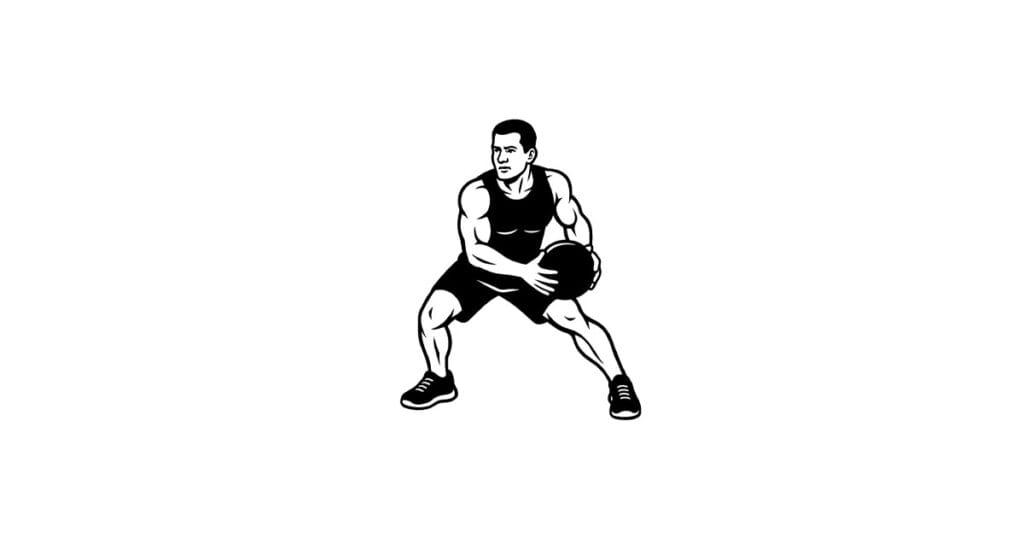
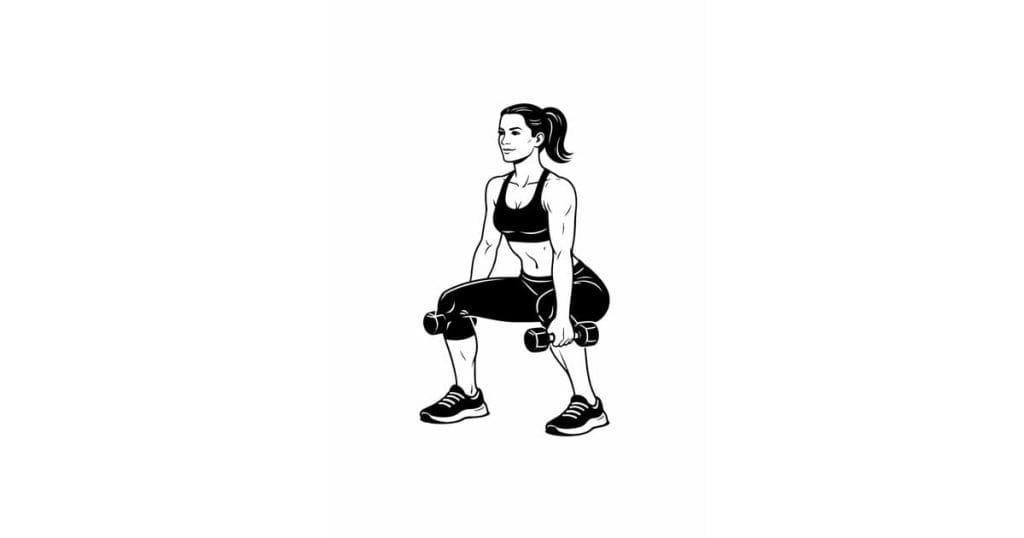
The Kettlebell Lunge is a unilateral lower-body strength exercise that primarily targets the quadriceps while engaging the glutes, hamstrings, adductors, calves, core, and forearms. The movement involves stepping forward into a lunge while holding kettlebells for additional resistance. By training one leg at a time, the exercise develops lower-body strength, balance, coordination, and stability while challenging the muscles responsible for controlling the hips, knees, and ankles.
The Kettlebell Lunge is commonly performed with one kettlebell in each hand, allowing the weights to hang naturally at the sides of the body. This position provides external resistance without requiring the kettlebells to be held at shoulder height. The exercise can also be performed with a single kettlebell, although holding two kettlebells provides a balanced loading position that allows both legs to work against additional resistance.
To perform the Kettlebell Lunge, begin standing tall with your feet approximately hip-width apart. Hold a kettlebell in each hand with your palms facing inward and your arms resting naturally at your sides. Keep your shoulders relaxed, chest lifted, and abdominal muscles engaged. Establish a stable standing position before initiating the first repetition.
Take a controlled step forward with one leg while keeping your feet approximately hip-width apart from side to side. Avoid placing your feet directly in line, as this can make balance more difficult. As your front foot contacts the floor, begin bending both knees to lower your body into the lunge position.
Continue descending until your rear knee approaches the floor or you reach a comfortable depth. Your front knee should track in the same general direction as your toes, while your rear knee bends naturally beneath your body. Maintain a stable torso and avoid allowing the kettlebells to swing forward or backward during the movement.
At the bottom of the lunge, your front leg should support a substantial portion of your body weight while your rear leg assists with balance and stability. The exact knee angles and torso position will vary depending on individual proportions, step length, and mobility. Focus on maintaining control rather than forcing a specific depth.
To return to the starting position, push firmly through your front foot and extend your front hip and knee. Bring your front foot backward to meet your rear foot while maintaining control of the kettlebells. Regain your balance before repeating the movement with the opposite leg. Continue alternating sides while maintaining consistent technique.
The quadriceps are the primary muscles involved in the Kettlebell Lunge. They are responsible for extending the knee as you rise from the lowered position and controlling knee flexion during the descent. The exercise places considerable demand on the quadriceps because the front leg must support and move the body against gravity while managing the additional kettlebell resistance.
The glutes contribute to hip extension during the upward phase and help stabilize the pelvis throughout the movement. The hamstrings assist with hip control and contribute to lower-body stability. The adductors help control the position of the thighs and pelvis, while the calves assist with ankle stability and balance as the body moves between standing and lunging positions.
The core muscles play an important role in maintaining torso stability. Holding kettlebells increases the external load and creates additional demands on the muscles responsible for controlling the spine and pelvis. Keeping the abdominal muscles engaged helps prevent excessive leaning, twisting, or unnecessary movement during each repetition.
The forearms and hands are also involved because they must maintain a secure grip on the kettlebell handles. As the body moves through each lunge, the kettlebells should remain relatively steady at the sides. Excessive swinging can shift the body’s balance and make it more difficult to maintain proper technique.
One common mistake during the Kettlebell Lunge is taking an inappropriate step length. A step that is too short may create excessive forward knee travel and make the movement uncomfortable, while an excessively long step can make it difficult to maintain balance and control. Choose a step length that allows both knees to bend naturally while keeping the torso stable.
Another common mistake is allowing the front knee to collapse inward. This can reduce lower-body stability and make it more difficult to control the movement. Keep your front knee tracking in the same general direction as your toes and maintain stable pressure through the front foot during both the lowering and rising phases.
Excessive forward leaning should also be avoided. A slight forward torso inclination can occur naturally during a lunge, but uncontrolled leaning may shift the kettlebells and reduce balance. Keep your torso aligned and maintain abdominal tension throughout the movement.
The Kettlebell Lunge differs from the Kettlebell Reverse Lunge in the direction of the stepping movement. During a forward lunge, the working leg steps forward before the body lowers. During a reverse lunge, one leg steps backward while the front leg remains planted. Both variations train similar muscle groups, but the stepping direction changes the balance and deceleration demands.
The exercise also differs from the Kettlebell Walking Lunge, which involves moving continuously forward rather than returning to the original standing position after each repetition. The standard forward Kettlebell Lunge allows the athlete to reset between repetitions, making it easier to maintain consistent positioning and controlled movement.
Overall, the Kettlebell Lunge is an effective lower-body strength exercise for developing the quadriceps, glutes, and supporting stabilizing muscles. When performed with appropriate resistance, controlled stepping, stable knee alignment, balanced foot positioning, and deliberate movement, it provides a practical way to improve unilateral leg strength, coordination, and lower-body stability.