The Kettlebell High Pull is an explosive hip-hinge exercise that combines the power of a kettlebell swing with an upper-body pulling action. The glutes are the primary muscle group involved, while the hamstrings, upper back, traps, shoulders, core, forearms, biceps, and lower back contribute to producing and controlling the movement. Because the kettlebell is accelerated through powerful hip extension before being guided toward the upper chest, the exercise develops coordination between the lower and upper body while reinforcing an explosive hinge pattern.
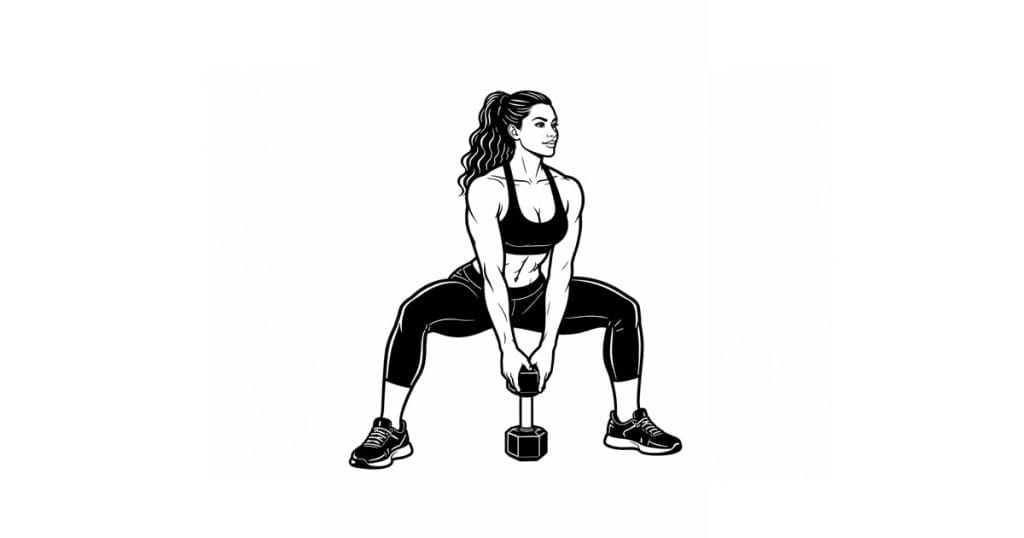
To perform the Kettlebell High Pull, place one kettlebell on the floor slightly in front of your feet. Stand approximately shoulder-width apart and push your hips backward into a hinge. Bend your knees slightly, maintain a controlled spinal position, and grip the kettlebell securely with one hand. Brace your core and prepare to initiate the exercise with a backswing similar to a one-arm kettlebell swing.
Hike the kettlebell backward between your legs while keeping it close to the body. Your hips should move backward while your knees remain softly bent. From the backswing, drive your feet into the floor and extend your hips forcefully. This explosive hip extension should create the majority of the kettlebell’s upward momentum.
As the kettlebell rises in front of your body, bend your elbow and pull it backward and slightly outward. Guide the kettlebell toward the upper chest while keeping it relatively close to your body. The elbow should lead the pulling action rather than the hand. At the highest point, the kettlebell should remain controlled rather than continuing upward uncontrollably.
Allow the arm to extend as the kettlebell begins moving forward and downward. Guide the kettlebell smoothly into the next backswing and push your hips backward to absorb the descending weight. Once the kettlebell passes between your legs, use another explosive hip extension to begin the next repetition.
The glutes provide much of the force required for the Kettlebell High Pull. They contract powerfully to extend the hips and accelerate the kettlebell out of the backswing. The hamstrings assist with hip extension and help control the hinge as the kettlebell travels between the legs. The lower back contributes isometrically by helping maintain a stable spinal position throughout the movement.
The upper back, traps, shoulders, and arms become increasingly involved as the kettlebell rises. The elbow bends and travels backward during the high-pull portion, requiring the upper back and shoulder muscles to guide the weight. The biceps assist with elbow flexion, while the forearms maintain control of the handle. The core helps transfer force between the lower and upper body while resisting excessive spinal movement.
A key feature of proper Kettlebell High Pull technique is that the hips generate the power. The exercise should not resemble an upright row performed with momentum. If the arm is responsible for lifting most of the kettlebell’s weight, the movement becomes less efficient and places unnecessary demand on the shoulder and elbow. Think about using the hips to launch the kettlebell upward and then using the arm to redirect and control its path.
Another common mistake is turning the hinge into a squat. During the backswing, the hips should travel backward while the knees bend only enough to accommodate the hinge. Excessive knee flexion changes the movement pattern and reduces the contribution of the posterior chain. Maintain stable feet and push the hips backward as the kettlebell passes between the legs.
The kettlebell should also remain relatively close to the body during the high pull. Allowing it to travel far forward increases the lever against the shoulder and makes the transition back into the downswing more difficult to control. Pull the elbow back as the kettlebell rises so the weight follows a compact path near the torso.
Avoid pulling the kettlebell excessively high. The goal is not to lift the weight as high as possible. The height should be determined by the momentum created through hip extension and your ability to maintain control. For many lifters, guiding the kettlebell toward approximately upper-chest height provides sufficient range without forcing the shoulder into an unnecessary position.
At the top of the movement, stand tall through the hips without leaning backward. Excessive lower-back extension often occurs when the hips stop extending and the torso continues moving. Finish with the glutes contracted, ribs controlled, and spine stable before allowing the kettlebell to descend.
The Kettlebell High Pull differs from the standard Kettlebell Swing because the elbow bends and pulls backward as the kettlebell approaches the top of its path. In a traditional swing, the arm remains relatively long and the kettlebell floats in front of the body. The High Pull redirects that momentum closer to the torso and adds an upper-body pulling component while preserving the same hip-driven foundation.
Overall, the Kettlebell High Pull is an effective power exercise for developing explosive hip extension, posterior-chain strength, upper-back involvement, grip control, and full-body coordination. When performed with a strong hip hinge, explosive glute drive, controlled elbow path, stable core, and smooth transition between the pull and backswing, it provides a dynamic progression from foundational kettlebell swing mechanics.