The Dumbbell T Push-Up is a challenging, full-body exercise that combines a traditional push-up with a rotational movement to enhance upper body strength, core stability, and coordination. This dynamic exercise targets the chest as the primary muscle group while engaging multiple supporting muscles, including the shoulders, triceps, upper back, and obliques. It is particularly effective for developing functional strength and improving overall movement control.
At its core, the Dumbbell T Push-Up integrates two key movement patterns: a horizontal push and a rotational stabilization component. The push-up portion primarily activates the chest muscles, along with the triceps and anterior shoulders, to press the body away from the ground. This foundational movement builds upper body pressing strength and muscular endurance.
The rotational phase introduces a significant core challenge. As you rotate your torso and lift one dumbbell toward the ceiling, your obliques and deep core muscles work to stabilize your spine and control the movement. This anti-rotation and rotation combination makes the exercise highly effective for improving core strength and balance.
The inclusion of dumbbells adds an element of instability, requiring greater engagement of stabilizing muscles. Your grip strength and forearms are also challenged as you maintain control of the weights throughout the movement. Additionally, the upper back muscles are activated during the rotation to support proper shoulder positioning and alignment.
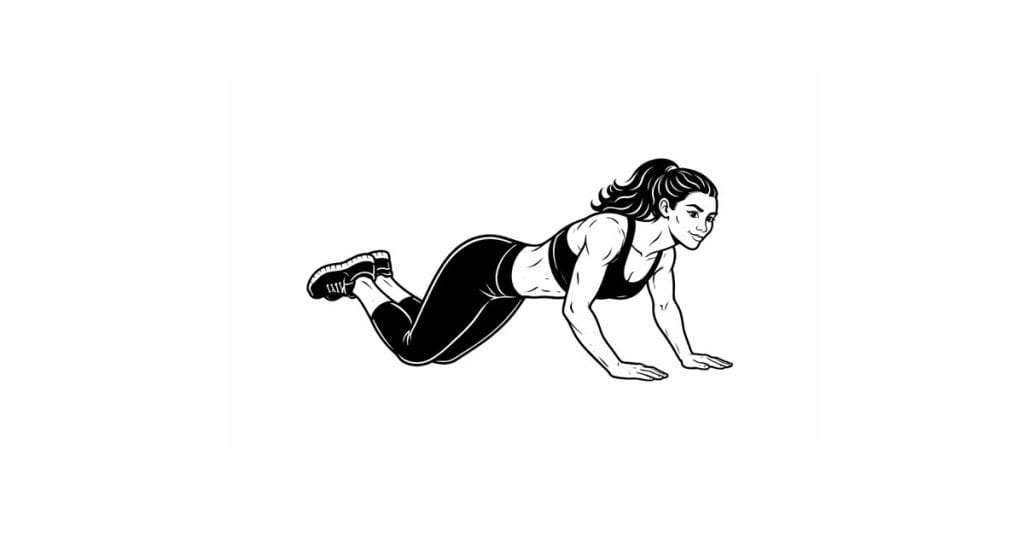
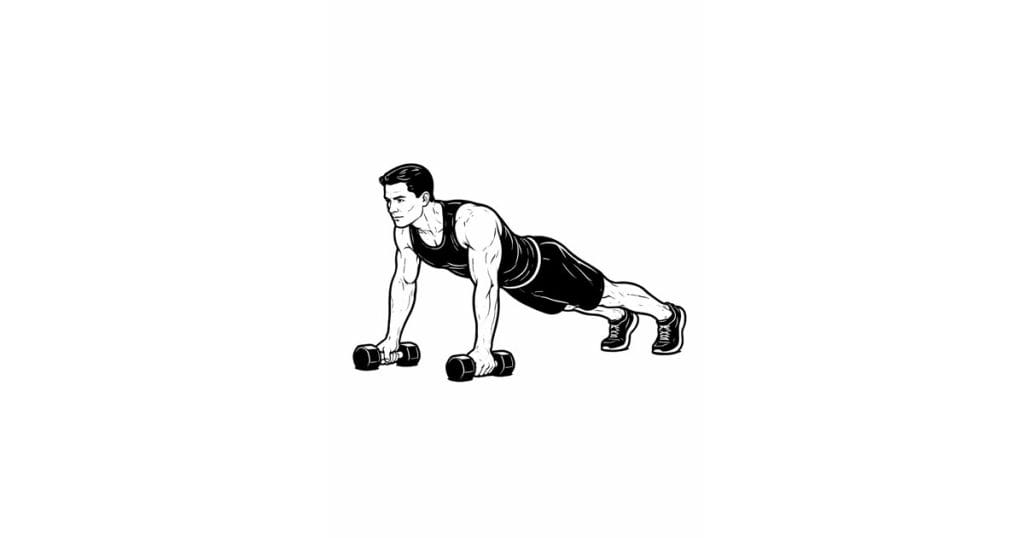
To perform the Dumbbell T Push-Up, begin in a high plank position with your hands gripping the dumbbells placed on the floor. Your body should form a straight line from head to heels, with your core and glutes engaged to maintain stability. Lower your chest toward the ground by bending your elbows, keeping them slightly angled rather than flared out.
After pushing back up to the starting position, shift your weight onto one arm and rotate your torso. Lift the opposite dumbbell upward, extending your arm toward the ceiling while stacking your shoulders vertically. This creates a T shape with your body. Pause briefly to stabilize, then return the dumbbell to the floor and repeat on the other side.
Maintaining control throughout the movement is essential. Avoid rushing the rotation or using momentum, as this reduces the effectiveness of the exercise and increases the risk of injury. Instead, focus on deliberate, controlled movements and proper alignment.
One of the key benefits of the Dumbbell T Push-Up is its ability to train multiple muscle groups simultaneously. It enhances upper body strength while also improving core stability and coordination. This makes it a valuable addition to functional training routines, as it mimics real-world movements that require both strength and control.
The exercise also promotes shoulder stability and mobility when performed correctly. By engaging the upper back and stabilizing muscles, it helps support healthy shoulder mechanics and reduces the risk of imbalances.
Common mistakes include allowing the hips to sag or rotate excessively, which can compromise spinal alignment. Failing to engage the core or rushing through the rotation can also reduce the effectiveness of the movement. Proper technique and controlled execution are crucial for maximizing benefits.
Overall, the Dumbbell T Push-Up is an advanced exercise that delivers a comprehensive upper body and core workout. Its combination of strength and rotational elements makes it highly effective for building functional fitness, improving stability, and enhancing overall athletic performance.