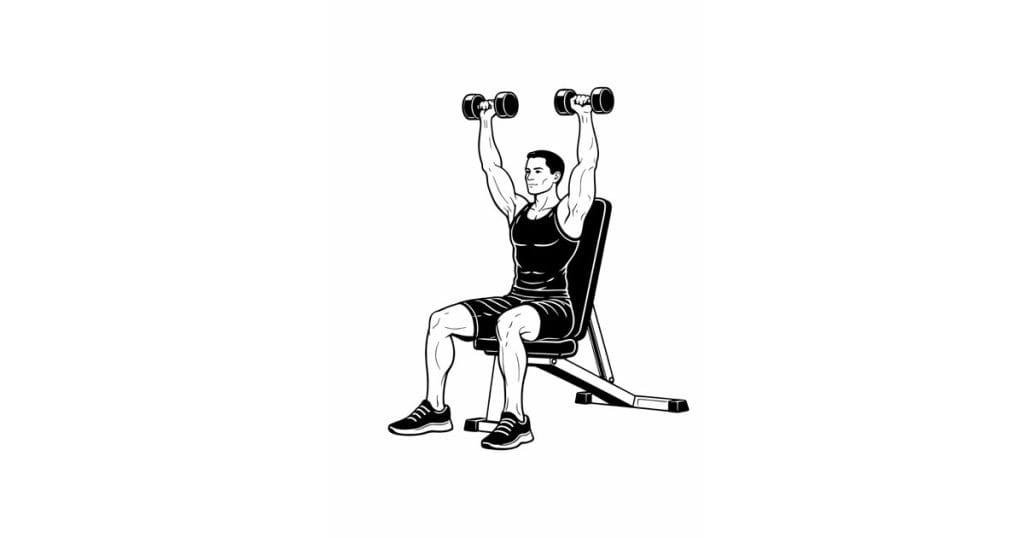
The Dumbbell Seated Shoulder Press is a foundational upper body exercise that targets the shoulders while also engaging supporting muscles to build strength, stability, and control. Performing the movement seated reduces lower body involvement, allowing for greater focus on the upper body and more precise muscle activation.
The primary muscles worked are the deltoids, particularly the anterior and lateral heads, which drive the pressing motion. The triceps assist with elbow extension, while the upper back helps stabilize the shoulder blades. The core also plays an important role in maintaining posture and preventing excessive movement during the lift.
One of the key benefits of this exercise is its ability to develop shoulder strength in a controlled environment. The seated position minimizes momentum, forcing the shoulders and arms to perform the majority of the work. This leads to more consistent strength gains and better muscle engagement.
Another advantage is improved stability and coordination. Because each arm works independently, dumbbells require more control than a barbell. This helps identify and correct imbalances between sides, leading to more symmetrical development and improved overall performance.
Dumbbells also allow for a more natural range of motion, reducing stress on the joints and making the movement more comfortable. This flexibility makes the exercise suitable for a wide range of individuals and training goals.
The Dumbbell Seated Shoulder Press can also contribute to better posture. Strengthening the shoulders and upper back supports proper alignment and helps counteract the effects of prolonged sitting and poor posture habits.
Proper technique is essential. The movement should be controlled, with a steady press upward and a slow descent. The elbows should start slightly in front of the body, and the dumbbells should travel in a straight line overhead. Maintaining a neutral spine and keeping the back supported against the bench ensures proper alignment.
Avoid excessive arching of the lower back. Keeping the core engaged and the torso stable helps protect the spine and ensures the shoulders remain the primary focus.
Breathing and tempo are important for performance. Exhale during the press and inhale during the lowering phase. Slower, controlled repetitions increase time under tension and improve muscle activation.
Common mistakes include using too much weight, flaring the elbows excessively, or losing back contact with the bench. These can reduce effectiveness and increase injury risk.
Overall, the Dumbbell Seated Shoulder Press is a versatile and essential exercise for building shoulder strength, improving stability, and enhancing upper body development. Its controlled nature and independent arm movement make it a key component of any well-rounded training routine.