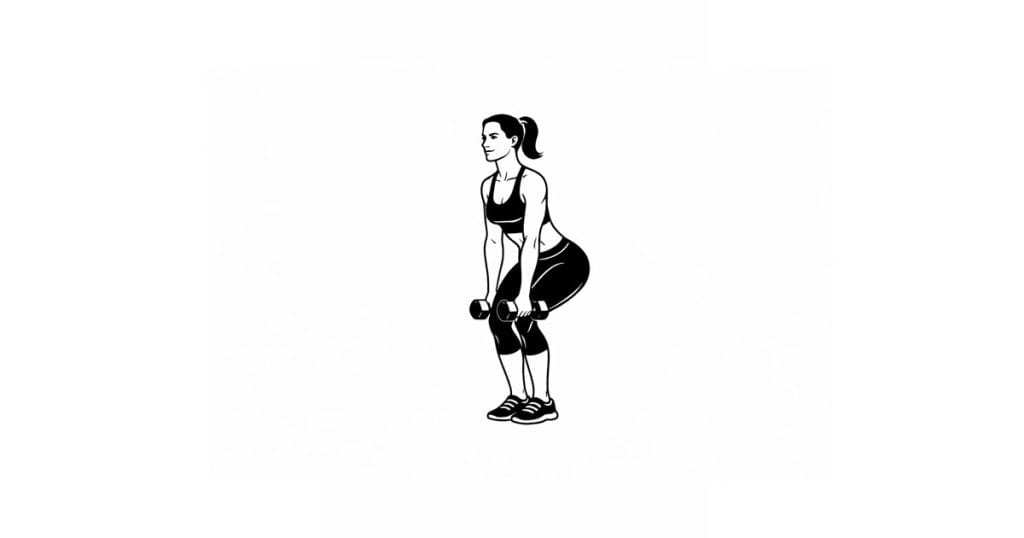
The Double Kettlebell Pulse Squat (Suitcase Hold) is a lower-body strength exercise performed while holding two kettlebells at the sides of the body. The movement primarily targets the quadriceps while engaging the glutes, hamstrings, adductors, calves, core, and forearms. By combining a suitcase hold with small, controlled squat pulses, the exercise increases muscular tension in the lower body while challenging grip strength, posture, and overall stability.
Unlike a traditional kettlebell squat, which involves standing fully between repetitions, the Double Kettlebell Pulse Squat (Suitcase Hold) emphasizes repeated partial movements near the bottom of the squat. The knees and hips remain flexed throughout the pulsing portion, requiring the quadriceps and glutes to maintain continuous muscular engagement. Holding two kettlebells beside the legs also increases the external resistance without requiring the weights to be supported at chest height.
To perform the Double Kettlebell Pulse Squat (Suitcase Hold), begin standing with your feet approximately shoulder-width apart. Point your toes slightly outward according to your natural squat stance. Hold one kettlebell in each hand with your arms extended beside your thighs. Keep your palms facing inward and maintain secure grips on both handles.
Engage your abdominal muscles and maintain an upright torso. Keep your shoulders relatively level and your spine neutral. Distribute your weight evenly across both feet, maintaining contact through your heels and the front portions of your feet. Allow the kettlebells to hang naturally outside your legs without swinging.
Initiate the squat by bending your hips and knees simultaneously. Lower your hips backward and downward while keeping your chest lifted. Allow your knees to travel naturally in the same general direction as your toes. Keep both kettlebells beside your legs and avoid allowing them to move excessively forward or backward.
Continue lowering until your thighs approach parallel to the floor or you reach a comfortable squat depth. The appropriate depth depends on your hip mobility, ankle mobility, and ability to maintain proper spinal positioning. Avoid forcing additional depth if your heels lift, your lower back rounds excessively, or the kettlebells interfere with your movement.
Once you reach the lower portion of the squat, maintain tension in your quadriceps and glutes. Extend your hips and knees slightly to raise your body a short distance. Immediately bend your hips and knees again to return toward the bottom position. This controlled upward and downward movement creates one squat pulse.
Continue performing small pulses while remaining in the lower portion of the squat. Avoid standing completely upright between repetitions. Each pulse should be smooth and deliberate, with consistent movement through the hips and knees. Maintain balanced pressure through both feet and prevent the kettlebells from swinging.
Throughout the exercise, keep your abdominal muscles engaged and your shoulders stable. The kettlebells should remain relatively stationary beside your legs while your lower body performs the pulsing movement. Avoid excessive forward leaning, shifting your weight onto one leg, or allowing your knees to collapse inward.
After completing the pulses, push firmly through your feet and extend your knees and hips to return to standing. Maintain control of both kettlebells throughout the upward movement. Finish standing tall with your arms extended and the weights hanging naturally at your sides.
The quadriceps are the primary muscles involved in the Double Kettlebell Pulse Squat (Suitcase Hold). These muscles control knee flexion during the lowering phase and contribute to knee extension during each upward pulse. Because the knees remain bent throughout the pulsing portion, the quadriceps experience sustained muscular tension.
The glutes assist with hip extension and help stabilize the pelvis. They remain active as the hips move slightly upward and downward during each pulse. The adductors contribute to hip control and lower-body stability, while the hamstrings assist with maintaining coordinated movement through the hips and knees.
The calves help maintain ankle stability and balanced pressure through the feet. The abdominal muscles support the torso and resist excessive spinal movement. Because the kettlebells are held on both sides, the trunk must maintain a stable position against the combined external load.
The forearms are also involved because both hands must maintain secure grips throughout the exercise. The traps and upper-back muscles help stabilize the shoulders and support the suitcase carrying position. Although the arms remain relatively stationary, these muscles contribute to maintaining controlled upper-body posture.
One important characteristic of the Double Kettlebell Pulse Squat (Suitcase Hold) is its emphasis on continuous muscular tension. Because the body does not return to a fully standing position between pulses, the quadriceps and glutes have less opportunity to relax. This makes the movement useful for developing lower-body muscular endurance and improving control within the lower portion of the squat.
A common mistake is performing pulses that are too large. Rising too high between repetitions changes the movement into a series of partial squats rather than controlled bottom-position pulses. Focus on maintaining a short, consistent range of motion while keeping the working muscles engaged.
Another common mistake is allowing the kettlebells to swing during the movement. Excessive swinging can interfere with balance and place unnecessary demands on the shoulders and lower back. Keep your arms extended and allow the weights to hang naturally beside your legs.
Using kettlebells that are too heavy can also compromise technique. Excessive resistance may cause forward leaning, uncontrolled pulses, or difficulty maintaining proper knee alignment. Select a weight that allows smooth movement and consistent posture throughout the exercise.
The Double Kettlebell Pulse Squat (Suitcase Hold) differs from the single-kettlebell suitcase variation because both hands hold separate weights, creating a more symmetrical loading pattern. It also differs from the Double Kettlebell Suitcase Squat because the movement emphasizes repeated partial squats instead of full-range repetitions.
Overall, the Double Kettlebell Pulse Squat (Suitcase Hold) is an effective exercise for developing quadriceps strength, glute endurance, grip strength, core stability, and lower-body control. When performed with appropriate resistance, controlled pulses, stable foot positioning, and consistent technique, it provides a challenging variation of the traditional kettlebell squat.