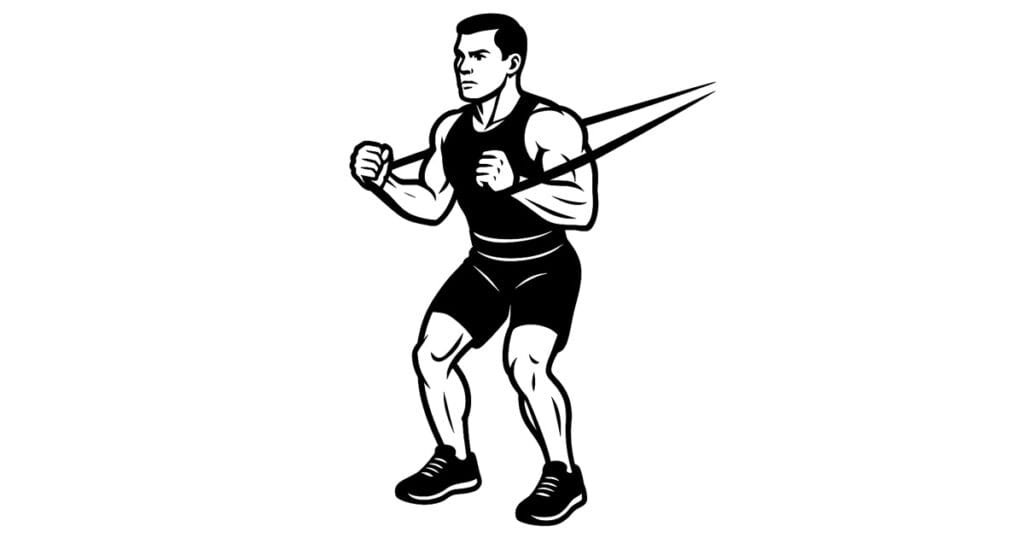
The Cable Iron Cross is an advanced chest isometric exercise that challenges the pectoral muscles to maintain tension while resisting outward cable forces. Performed standing between two cable pulleys with the arms extended to the sides, this movement emphasizes static chest contraction, shoulder stability, and core control. Unlike traditional fly or press variations, the cable iron cross focuses on holding strength rather than dynamic repetition, making it uniquely demanding despite minimal visible movement.
The primary muscles involved are the pectorals, which work isometrically to prevent the arms from being pulled outward by the cables. The shoulders, particularly the anterior and medial deltoids, play a major stabilizing role, while the core muscles engage to maintain upright posture and resist rotational or extension forces. This full-body stabilization requirement contributes to the intensity of the exercise and reinforces total upper-body control.
One of the key benefits of the cable iron cross is constant tension. Because the cables continuously attempt to pull the arms apart, the chest remains under load for the entire duration of the hold. This uninterrupted tension improves muscular endurance and enhances the mind-muscle connection within the chest. The static nature of the exercise also increases awareness of shoulder positioning and scapular control.
Proper setup is critical for effectiveness and safety. Setting the pulleys at shoulder height aligns resistance with the horizontal plane of the arms, placing maximum demand on the chest. Stepping forward slightly ensures consistent tension before the hold begins. A stable stance with the core braced helps prevent unwanted body movement and keeps the stress focused on the upper body.
During execution, the arms should remain extended out to the sides with a slight bend at the elbows. Actively squeezing the chest is essential to resist the outward pull of the cables. The shoulders should stay down and slightly back, avoiding shrugging or elevation, which can reduce chest engagement and increase joint strain. Controlled breathing helps maintain posture and tension throughout the hold.
Because the movement is isometric, small compensations can significantly reduce effectiveness. Bending the elbows, allowing the arms to drift forward, or leaning the torso shifts tension away from the chest and onto other muscles. Maintaining strict positioning is essential to preserve the integrity of the exercise.
The cable iron cross places high demands on shoulder stability, making appropriate resistance selection especially important. Light to moderate loads are usually sufficient to create an intense stimulus. Using excessive weight often leads to loss of position, elbow bending, or shoulder discomfort. Precision and control matter far more than load selection in this movement.
This exercise is particularly effective for developing chest endurance and control rather than maximal strength. The sustained contraction improves the ability to maintain tension under load, which can carry over to pressing and fly variations. Because each arm works independently, the movement also highlights and challenges side-to-side imbalances.
Overall, the Cable Iron Cross is a challenging and advanced chest-focused exercise that emphasizes isometric strength, shoulder stability, and core control. When performed with proper setup, controlled tension, and appropriate resistance, it provides a unique and highly effective stimulus for advanced chest development and upper-body stability.