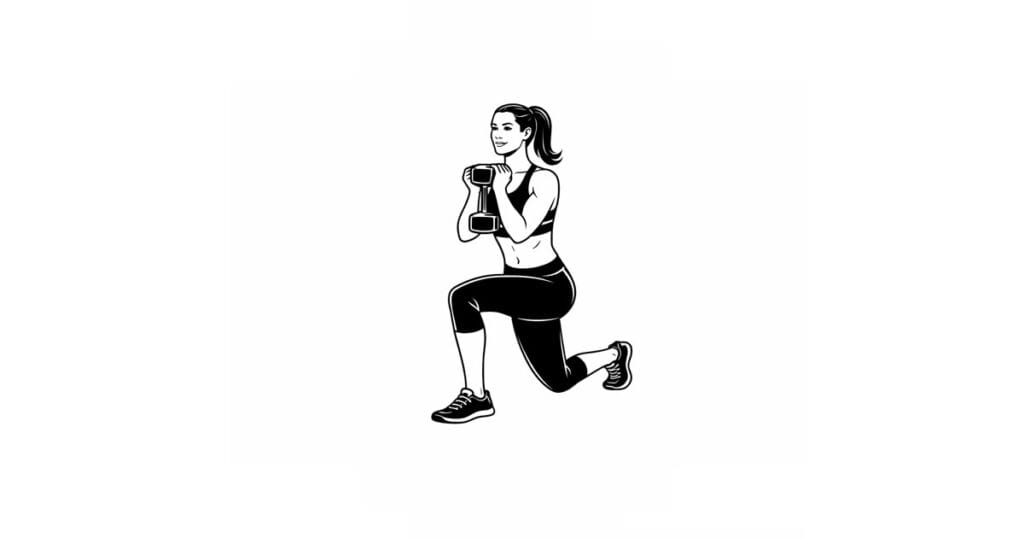
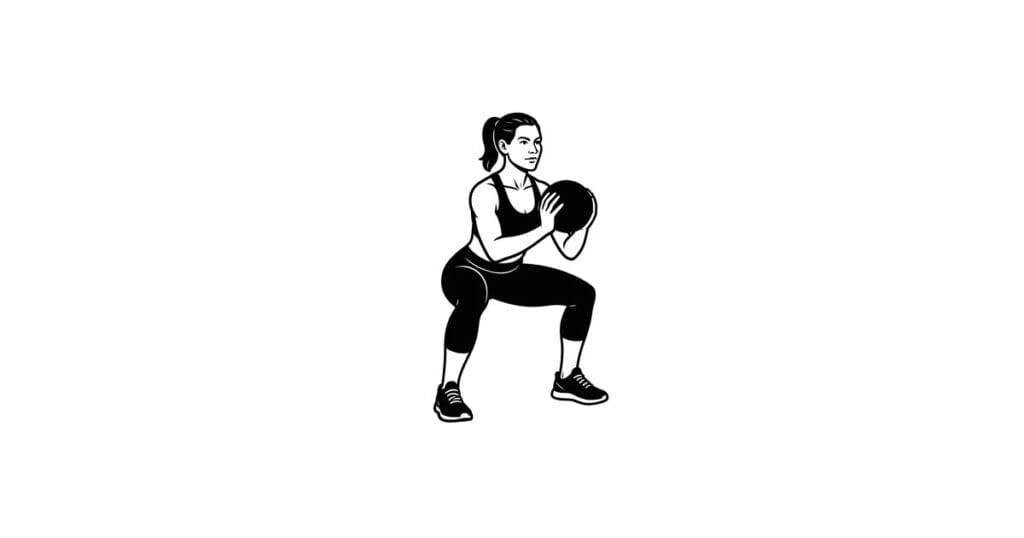
The Bottoms-Up Kettlebell Squat is a squat variation performed while holding a kettlebell upside down in front of the chest, with the weighted bell positioned above the handle. The quads are the primary muscle group worked, while the glutes, hamstrings, core, forearms, upper back, and shoulders contribute to the movement and stabilization of the kettlebell. The inverted kettlebell position adds a balance and grip challenge to the traditional squat, requiring continuous upper-body tension while the lower body performs the squat pattern.
To perform the Bottoms-Up Kettlebell Squat, stand with your feet approximately shoulder-width apart. Hold one kettlebell upside down in front of your chest with both hands gripping the handle. The weighted bell should point upward while the handle remains underneath it. Keep the kettlebell relatively close to your torso so it can be controlled throughout the movement.
Before beginning the squat, establish a stable standing position. Keep your feet firmly planted and distribute your weight across the heel, base of the big toe, and base of the little toe. Brace your abdominal muscles and maintain a tall torso. Grip the kettlebell firmly enough to prevent the bell from tipping excessively to either side.
Begin the repetition by bending your knees and hips together. Lower your body toward the floor while keeping the kettlebell balanced in front of your chest. Allow your knees to travel naturally in the same general direction as your toes. Maintain control through your feet and avoid allowing the knees to collapse inward as you descend.
Continue lowering until you reach a comfortable squat depth that allows you to maintain a stable spine, balanced kettlebell, and firmly planted feet. Individual squat depth will vary based on mobility, body proportions, and control. Avoid forcing additional depth if the pelvis begins to lose position or the heels rise from the floor.
At the bottom of the squat, maintain abdominal tension and continue gripping the kettlebell securely. Do not allow the weight to pull your shoulders forward or cause your torso to collapse. From this position, drive through your feet and extend your knees and hips to return to standing. Finish tall without leaning backward or excessively arching the lower back.
The bottoms-up position is what distinguishes this exercise from a standard kettlebell squat. Because the heavier portion of the kettlebell is positioned above the handle, the weight is naturally less stable. Small changes in hand pressure and upper-body position can cause the kettlebell to tilt. The forearms, hands, shoulders, and upper back must continuously make small adjustments to maintain control.
Keeping the kettlebell close to the chest improves stability. Holding it too far forward increases the leverage against the torso and can make the kettlebell significantly more difficult to balance. Keep your elbows comfortably bent and position the weight close enough that you can maintain a tall posture without resting it against your body.
Core engagement is also important throughout the Bottoms-Up Kettlebell Squat. The weight held in front of the body creates a demand on the trunk to resist excessive movement. Brace the abdominal muscles before descending and maintain that tension as you squat and stand. Avoid excessively arching the lower back or allowing the ribs to flare forward.
The lower-body mechanics should remain similar to a controlled squat. The knees and hips flex during the descent and extend during the ascent. Keep your feet firmly planted and allow the knees to move naturally rather than forcing them excessively outward or inward. The quads contribute strongly to knee extension, while the glutes help extend the hips as you return to standing.
A common mistake is focusing so heavily on balancing the kettlebell that lower-body technique deteriorates. Continue monitoring your foot pressure, knee position, torso control, and squat depth while maintaining the inverted weight. The kettlebell challenge should not cause the knees to collapse, the heels to lift, or the spine to round excessively.
Another common mistake is selecting a kettlebell that is too heavy. The bottoms-up position can make a relatively light kettlebell challenging to stabilize. If the bell repeatedly tips, the wrists lose position, or the torso must make large compensatory movements, the resistance may be too difficult to control effectively.
Movement speed should remain controlled. Dropping quickly into the squat can make the kettlebell more difficult to balance and may disrupt foot and knee position. Descend smoothly, maintain control at the bottom, and stand with steady force. The kettlebell should remain as stable as possible throughout the entire repetition.
Overall, the Bottoms-Up Kettlebell Squat combines lower-body strength with core stability, grip control, and upper-body coordination. The quads and glutes perform the primary squat action while the core, forearms, shoulders, and upper back stabilize the inverted kettlebell. When performed with a secure grip, balanced kettlebell, braced core, stable feet, controlled knee tracking, and comfortable squat depth, the Bottoms-Up Kettlebell Squat provides an effective way to develop lower-body strength while adding a unique stability challenge.