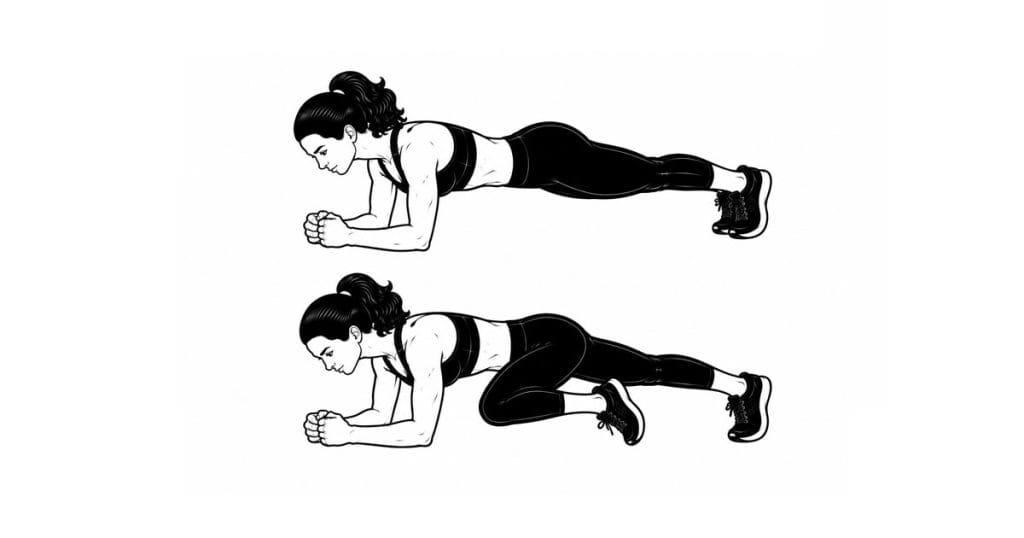
The plank dolphin kicks exercise is a dynamic core stability movement that combines a traditional forearm plank with controlled leg lifts and subtle hip motion. This variation increases the intensity of a standard plank by adding movement, requiring greater muscular coordination, balance, and endurance. It is widely used in functional fitness and core training routines to enhance stability, strengthen the core, and improve overall body control.
The primary muscle group targeted in plank dolphin kicks is the abs and core. The deep core muscles, including the transverse abdominis and rectus abdominis, are constantly engaged to maintain a stable plank position. As the legs alternate lifting, the core must work harder to prevent excessive movement in the torso, making this exercise highly effective for developing core endurance and control.
Secondary muscles include the shoulders, which support the upper body in the forearm plank position. The deltoids and stabilizing muscles of the shoulder girdle are continuously active to maintain alignment. The glutes also play an important role by stabilizing the pelvis and assisting with the leg lift, while the hip flexors contribute to lifting the leg and controlling the motion.
One of the key benefits of plank dolphin kicks is improved core stability under dynamic conditions. Unlike static planks, this exercise introduces movement, forcing the body to adapt and maintain alignment despite shifting loads. This improves the ability to stabilize the spine during real-world activities and athletic movements.
Another major benefit is increased muscular endurance. Holding a plank position while performing repeated leg lifts challenges the muscles over time, helping to build stamina in both the core and supporting muscle groups. This can translate to better performance in other exercises and daily activities.
Plank dolphin kicks also enhance coordination and balance. Alternating leg movements while maintaining a steady upper body requires control and focus. This helps improve neuromuscular coordination and reinforces efficient movement patterns.
To perform plank dolphin kicks, begin in a strong forearm plank position with your elbows under your shoulders and your body aligned. Engage your core and glutes, then lift one leg slightly off the ground while gently shifting your hips upward. Return to the starting position and repeat on the opposite side.
Proper technique is essential to maximize effectiveness. Focus on keeping your movements small and controlled. The goal is to maintain a stable torso while introducing just enough movement to challenge your balance and coordination.
Common mistakes include lifting the leg too high, allowing the lower back to arch, and rushing through repetitions. These errors reduce the effectiveness of the exercise and increase the risk of strain.
From a safety perspective, it is important to maintain proper alignment and avoid excessive movement. Keeping the core engaged and limiting the range of motion will help protect the lower back and shoulders. Beginners can modify the exercise by performing a standard plank or reducing the leg lift height.
Overall, plank dolphin kicks are an effective and versatile core exercise that builds strength, endurance, and coordination. Their dynamic nature makes them a valuable addition to any core-focused workout routine.