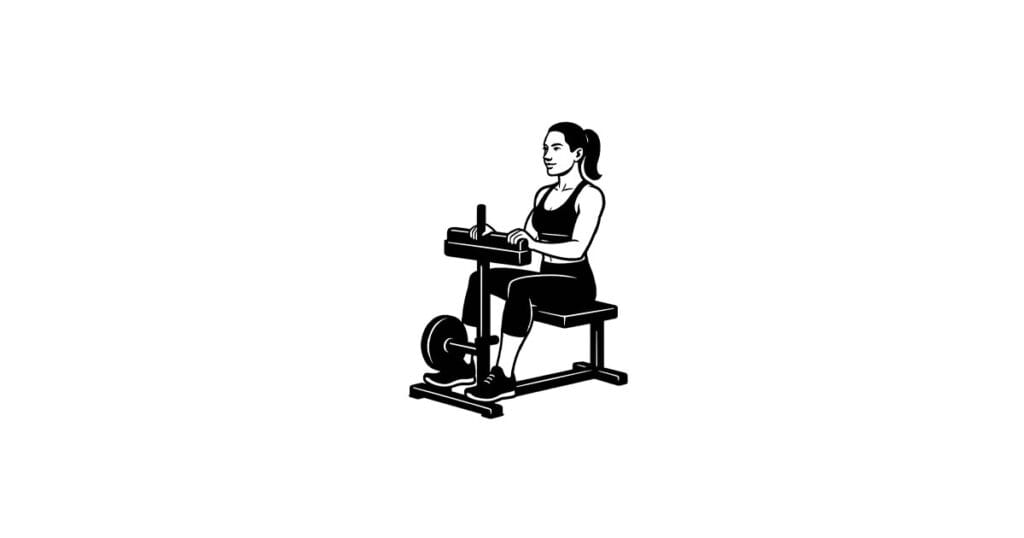
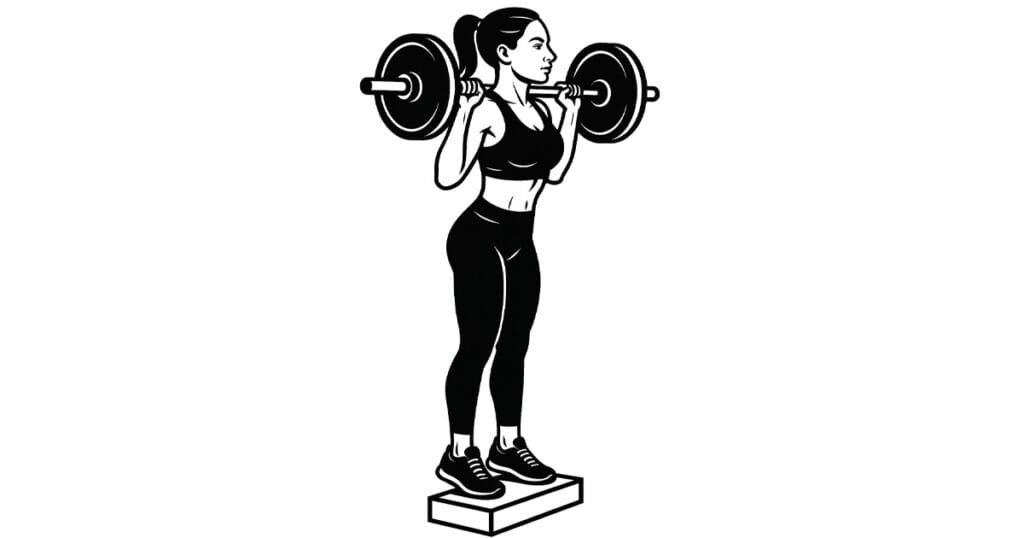
The Kettlebell Calf Raise is a weighted lower-leg strength exercise performed by holding kettlebells while repeatedly raising the heels away from the floor. The calves are the primary muscle group worked, while the forearms help maintain the kettlebell grip and the core contributes to keeping the body stable and upright. Adding kettlebells increases the resistance compared with a bodyweight calf raise while allowing the movement to remain simple and controlled.
To perform the Kettlebell Calf Raise, stand upright with your feet approximately hip-width apart. Hold a kettlebell in each hand with your arms extended naturally beside your body. Keep your shoulders relaxed, chest controlled, and abdominal muscles lightly braced. Your feet can remain parallel or turn slightly outward based on what feels comfortable for your ankles and lower legs.
Begin with both heels firmly on the floor. Distribute your weight evenly across the feet and establish a stable standing position before starting the repetition. The kettlebells should hang quietly beside the thighs rather than swinging forward or backward. Keep your head and torso upright throughout the exercise.
Initiate the movement by pressing through the balls of your feet and lifting your heels away from the floor. Rise onto your toes as high as you can while maintaining control and keeping your ankles aligned. The movement should come primarily from plantar flexion at the ankles rather than from bending the knees or shifting the hips.
At the top of the repetition, pause briefly and contract your calf muscles. Your body should remain tall, with the kettlebells hanging directly beside you. Avoid leaning forward to gain additional height or shifting your weight excessively toward the outside or inside edges of your feet. Maintain balanced pressure through the forefoot.
Lower your heels slowly toward the floor. Control the descent rather than allowing your body weight and the kettlebells to pull the heels downward quickly. Continue lowering until your heels return to the starting position. Once you have regained a stable position, begin the next repetition without bouncing.
The calves contain muscles that contribute to plantar flexion, the action of pointing the foot downward or raising the heel while standing. During the Kettlebell Calf Raise, these muscles contract to lift the body against gravity while also overcoming the additional resistance provided by the kettlebells. The standing position allows both legs to work simultaneously.
Ankle alignment is important throughout the movement. As the heels rise, avoid allowing them to drift excessively inward or outward. Ideally, the ankles remain relatively stable while the body rises vertically. Excessive rolling through the feet can reduce control and may place unnecessary stress on the ankles.
Knee position should also remain consistent. Keep the legs relatively straight without aggressively locking the knees. Excessive knee bending changes the mechanics of the exercise and can turn the movement into a small squat rather than a focused calf raise. Maintain enough knee stability to allow the ankles to produce most of the visible movement.
The kettlebells should remain passive during the exercise. Their purpose is to provide additional resistance, not momentum. Keep your arms extended and allow the weights to hang beside your body. Swinging the kettlebells can disrupt balance and make it more difficult to maintain a consistent calf raise.
Grip strength contributes to the exercise because the kettlebells must be held throughout the movement. Keep a secure but controlled grip around each handle. The wrists should remain relatively neutral and the shoulders should not shrug upward as the calves work. If grip fatigue causes the kettlebells to become difficult to control, the quality of the movement can decrease.
Core engagement helps maintain a stable torso as the body’s center of mass moves upward and downward. Lightly brace the abdominal muscles and avoid excessive arching through the lower back. The torso should rise vertically with the heels rather than rocking forward and backward during each repetition.
A common mistake is performing the exercise too quickly. Rapid bouncing can use elastic momentum instead of requiring the calf muscles to control the full movement. Use a deliberate upward phase, a brief controlled position at the top, and a smooth lowering phase. This makes each repetition easier to control and helps maintain consistent ankle alignment.
Range of motion should be based on individual ankle mobility and control. Rise as high as you can without losing balance or allowing the ankles to roll. When lowering, return the heels to the floor without forcefully dropping them. The movement should remain comfortable through the feet, ankles, and calves.
The Kettlebell Calf Raise can also challenge balance because the body is supported on a smaller surface area at the top of each repetition. Maintain visual focus on a stable point and keep the kettlebells close to your sides. If balance becomes difficult, reduce the resistance and prioritize controlled movement.
Overall, the Kettlebell Calf Raise is a straightforward strength exercise for developing the calves while also challenging grip and standing stability. The kettlebells provide additional resistance without changing the fundamental ankle movement of a traditional calf raise. When performed with stable feet, aligned ankles, a tall torso, controlled heel elevation, and a slow lowering phase, the Kettlebell Calf Raise provides an effective way to strengthen the lower legs and improve controlled plantar-flexion strength.