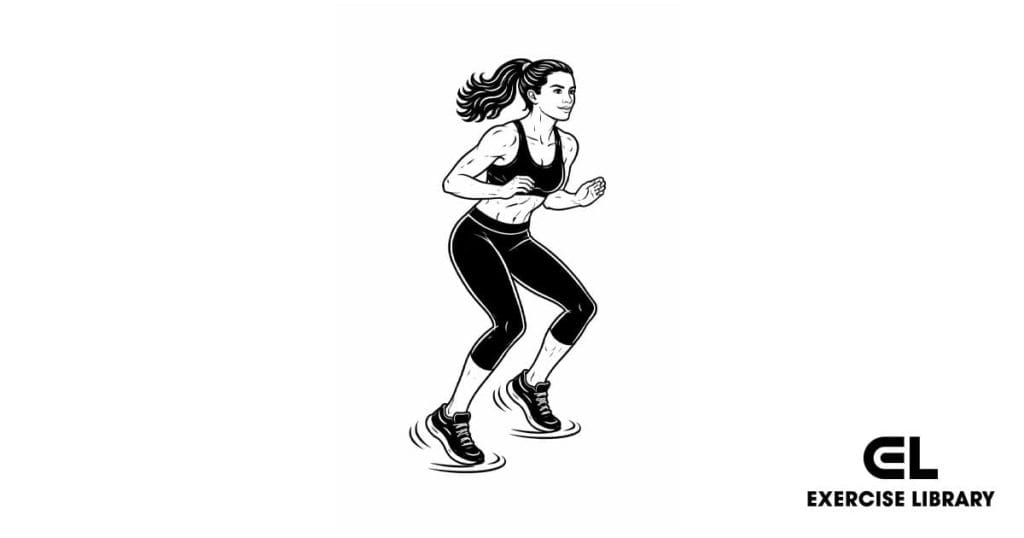
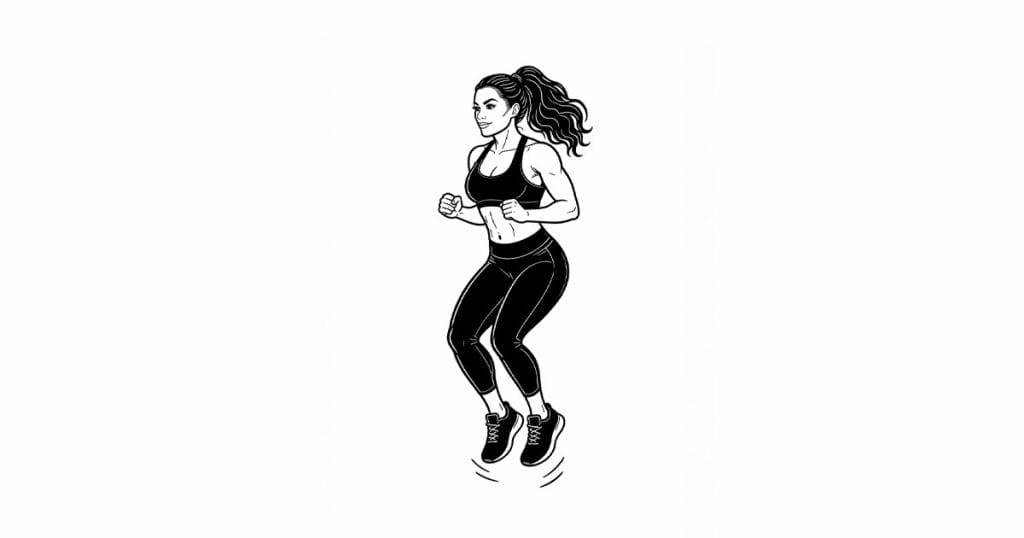
BOSU Toe Taps (Dome Side) are a low-impact cardio exercise that improves lower-body endurance, balance, agility, coordination, and foot speed. Performed by alternately tapping the top of a dome-side-up BOSU trainer with each foot, this simple movement becomes more challenging due to the unstable surface. The BOSU forces the ankles, knees, hips, and core to make continuous adjustments, making the exercise highly effective for improving movement quality while also elevating the heart rate.
The primary muscle group targeted during BOSU Toe Taps is the calves. The calf muscles repeatedly plantarflex the ankle as each foot leaves the floor and returns after tapping the BOSU. Because the movement is continuous, the calves remain under constant tension, helping improve muscular endurance and lower-leg conditioning.
Several secondary muscle groups contribute to the movement. The quadriceps extend the knees during each step, while the glutes stabilize the hips and control weight shifts from side to side. The hamstrings assist with deceleration and lower-body stability during each landing. The abs and core, including the rectus abdominis, transverse abdominis, and obliques, remain engaged to stabilize the trunk and maintain posture throughout the exercise. Small stabilizing muscles in the feet and ankles also work continuously to adapt to the unstable BOSU surface.
One of the biggest benefits of BOSU Toe Taps is improved cardiovascular fitness. The continuous alternating foot movement quickly elevates the heart rate, making the exercise an excellent addition to warm-ups, cardio circuits, HIIT workouts, and conditioning sessions. It provides an effective cardiovascular challenge without the high impact associated with jumping exercises.
Another major benefit is enhanced balance and proprioception. Because only one foot contacts the BOSU at a time, the supporting leg must constantly stabilize the body during each weight transfer. This improves joint awareness, coordination, and dynamic balance while strengthening the stabilizing muscles around the ankles, knees, and hips.
The exercise also develops foot speed and agility. The quick alternating taps encourage faster lower-body movement while reinforcing proper control and coordination. These qualities can improve athletic performance in sports that require rapid footwork, directional changes, and efficient movement patterns.
To perform BOSU Toe Taps (Dome Side), place the BOSU on a flat surface with the dome facing upward. Stand directly in front of it with your feet approximately hip-width apart. Lift one foot and lightly tap the center of the dome with your toes before returning it to the floor. Immediately repeat with the opposite foot, alternating continuously in a smooth, controlled rhythm.
Maintain an upright posture with your chest lifted, your core braced, and your eyes looking forward throughout the exercise. Focus on making light, quick foot contacts rather than forcefully stepping onto the BOSU. Keep the movement controlled while gradually increasing speed as your coordination improves.
Proper technique is essential for maximizing results. Stay light on your feet, keep your hips level, and avoid excessive upper-body movement. Smooth, rhythmic footwork is more effective than rushing through the exercise with poor control.
Common mistakes include striking the BOSU too hard, placing excessive body weight onto the dome, leaning forward excessively, constantly looking down at your feet, or allowing technique to deteriorate as speed increases. Prioritizing balance, posture, and control will improve both performance and safety.
From a safety standpoint, perform the exercise on a stable, non-slip surface and begin at a comfortable pace until you become familiar with the BOSU’s instability. Beginners should focus on coordination before increasing speed or workout duration.
Overall, BOSU Toe Taps (Dome Side) are an excellent functional exercise for improving cardiovascular endurance, lower-body coordination, balance, agility, foot speed, and ankle stability. Their combination of simple movement and unstable-surface training makes them suitable for athletes, general fitness enthusiasts, and anyone looking to improve movement quality and overall conditioning.