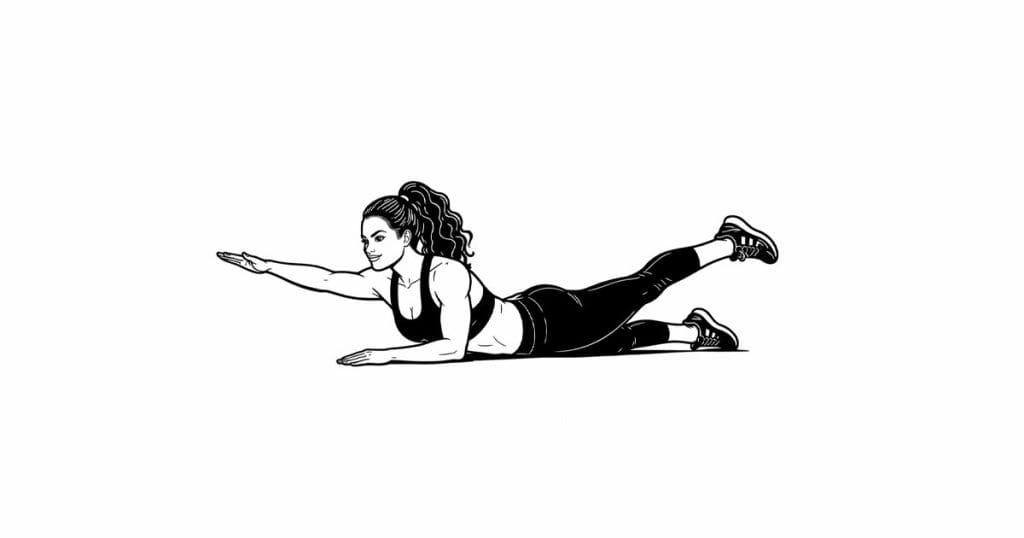
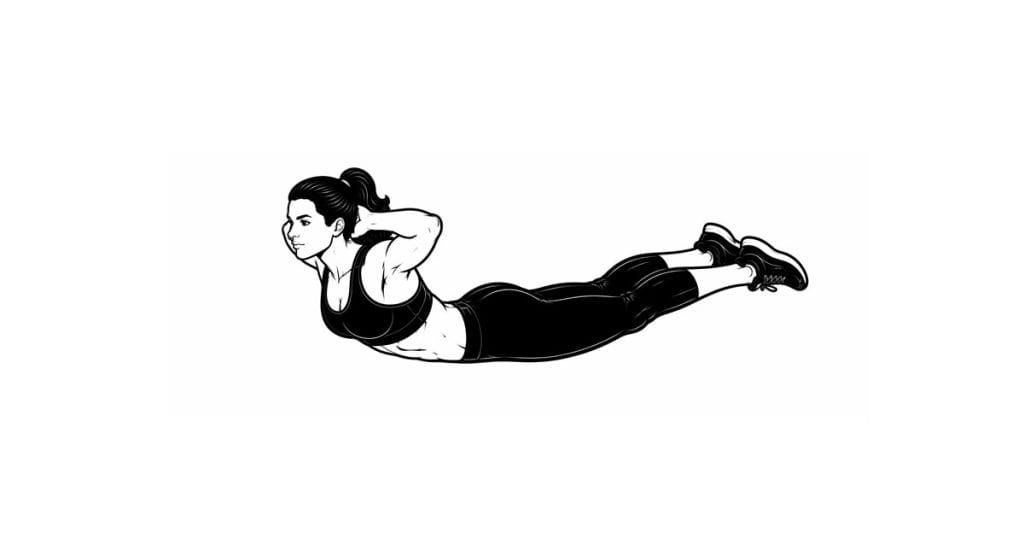
The Bosu Back Extension is a posterior-chain strengthening exercise that targets the lower back while also engaging the glutes, hamstrings, core, and upper back. Performed with the torso positioned over a BOSU trainer, this exercise uses bodyweight resistance and an unstable surface to challenge spinal stability, balance, and muscular control. It is commonly used to improve lower back strength, enhance posture, and develop endurance in the muscles responsible for maintaining an upright position.
The primary muscle group involved in the Bosu Back Extension is the lower back, particularly the spinal erectors. These muscles run along the spine and are responsible for extending and stabilizing the trunk. During the lifting phase of the exercise, the spinal erectors contract to raise the torso from a flexed position to a neutral alignment. Consistent training of these muscles can contribute to improved posture, better movement mechanics, and greater resilience during daily activities.
Secondary muscles play an important role in supporting the movement. The glutes contribute to hip extension and help stabilize the pelvis throughout the exercise. The hamstrings assist with controlling the hip joint and maintaining proper positioning of the lower body. The core muscles work isometrically to support spinal alignment and resist unwanted movement, while the upper back helps maintain posture and shoulder positioning.
One of the unique benefits of the Bosu Back Extension is the unstable surface created by the BOSU trainer. This instability increases the demand on stabilizing muscles and encourages greater body awareness. Unlike traditional floor-based back extensions, the BOSU adds a balance component that can enhance coordination and control while strengthening the posterior chain.
The exercise is particularly useful for individuals looking to improve postural endurance. Modern lifestyles often involve prolonged sitting, which can contribute to weakness in the lower back and glutes. The Bosu Back Extension helps counteract these effects by strengthening the muscles that support proper spinal alignment and hip function.
To perform the exercise correctly, position your hips over the center of the BOSU dome and allow your torso to drape slightly forward. Begin the movement by engaging the glutes and lower back, then lift your chest until your body reaches a straight line. The goal is not to lift as high as possible but rather to achieve controlled spinal extension while maintaining neutral alignment.
At the top of the movement, briefly pause and focus on squeezing the glutes and maintaining tension throughout the posterior chain. Lower your torso slowly and under control back to the starting position. This controlled eccentric phase helps maximize muscular engagement and improves movement quality.
Proper technique is essential for both safety and effectiveness. Many people make the mistake of excessively arching the lower back at the top of the movement. While the exercise involves spinal extension, the objective is to reach a neutral position rather than forcing additional range of motion. Overextending can increase stress on the lumbar spine and reduce the exercise’s effectiveness.
Another common mistake is using momentum to lift the torso. Swinging the body reduces muscular activation and can compromise spinal stability. Moving slowly and deliberately helps ensure that the targeted muscles perform the work.
From a safety perspective, maintaining a neutral neck position is important. Looking upward can place unnecessary strain on the cervical spine. Keeping the gaze slightly downward helps maintain proper alignment throughout the movement.
Overall, the Bosu Back Extension is an effective exercise for strengthening the lower back, improving postural endurance, and developing posterior-chain stability. Its combination of spinal extension and balance demands makes it a valuable addition to routines focused on functional strength, injury prevention, and overall movement quality.